


TEG URBAN RENEWAL
Urban renewal
The experience, professionalism and financial strength of TEG URBAN RENEWAL give its clients unique advantages in urban renewal, and the safest, most efficient and most convenient framework available in the field today.
TEG URBAN RENEWAL is the executing arm of TEG ISRAEL in urban renewal. In 2023 the company acquired 33% of Erez Tirosh (formerly Neot HaMaccabim) — a private real-estate company that for some 30 years has been engaged in residential development and project marketing, having built and populated over 1,000 housing units across Israel. Erez Tirosh's financial strength and professionalism join the creative solutions and innovation of TEG URBAN RENEWAL, tailored to the Israeli real-estate market at every stage of initiation, financing, planning and construction. This unique combination gives TEG URBAN RENEWAL a proven strategic advantage in urban renewal.
Advantages
Involving the residents all the way, addressing their concerns, and having the professional team answer them — that, in our view, is the winning formula for every urban renewal project. What sets our company apart is its emphasis on the social side, out of a belief in helping the residents and moving the project forward.
What is urban renewal?
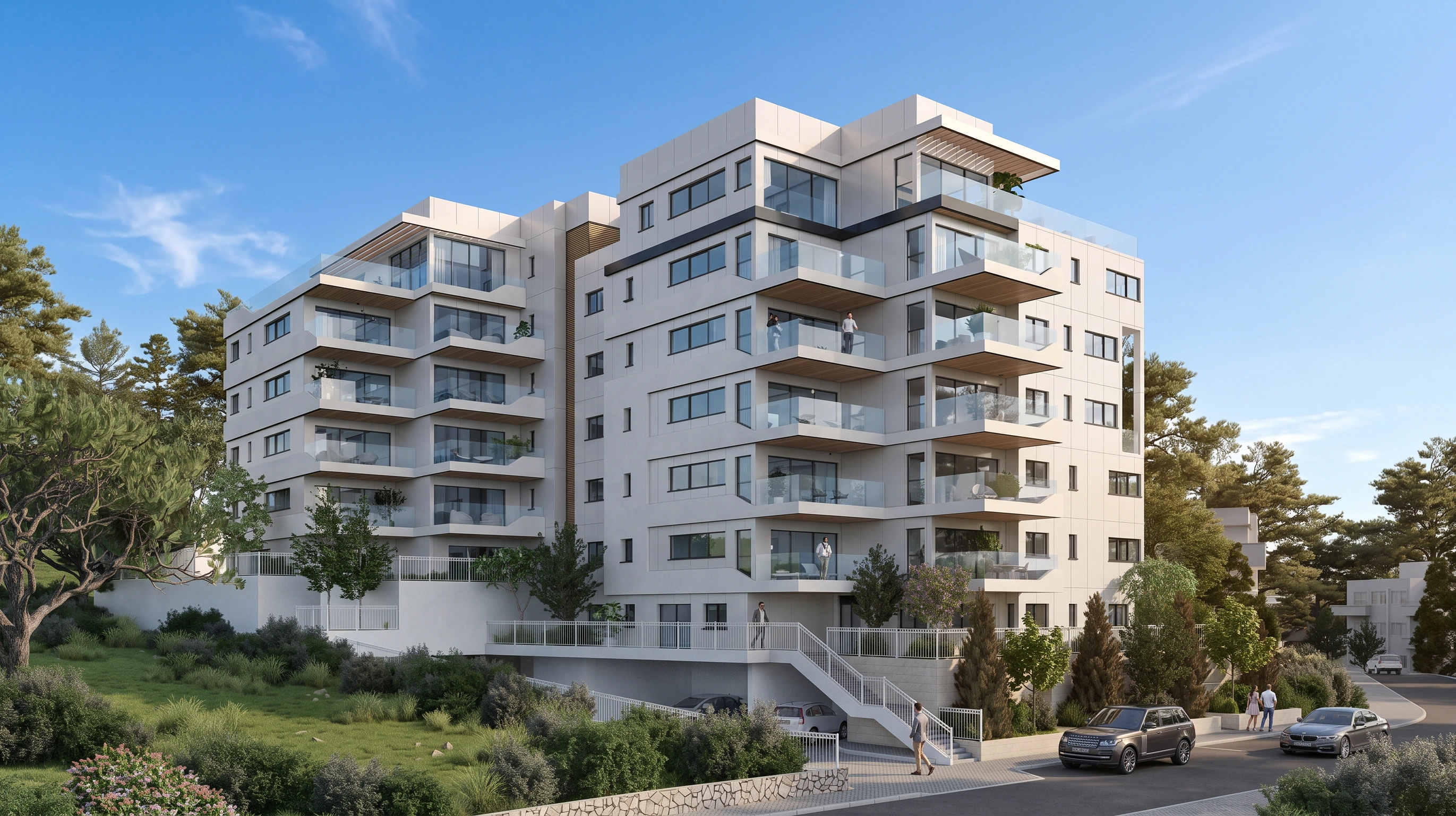
Urban renewal is an opportunity for property owners to strengthen and protect their apartments, increase the value of their assets, improve their quality of life and upgrade public spaces and infrastructure around their homes. In an urban renewal project the existing building is demolished and replaced by a new, well-designed building with an elevator, a safe room, a sun balcony and landscaping… all at no cost to the property owners.
Evacuation and reconstruction — how it works
Urban renewal by evacuation and reconstruction (Pinui-Binui / Binui-Pinui-Binui) is subject to a city building plan (TABA) approved by a district committee. Usually, when evacuation and reconstruction takes place in an existing neighborhood, the new neighborhood is denser, so the construction is accompanied by upgraded infrastructure and the addition of green and public spaces.
To allow an evacuation-and-reconstruction process, the compound must be declared by the state as designated for it. Evacuation and reconstruction usually concerns whole compounds and must include at least 24 existing housing units (unlike a TAMA 38/2 demolition-and-reconstruction project, in which a single building with a small number of apartments can also be demolished and rebuilt).
An evacuation-and-reconstruction process requires the consent of 80% of the apartment owners (a qualified majority), as in TAMA 38/2, compared with the consent of 67% of the residents required in TAMA 38/1 under the "strengthening and addition" track. At first the program required the consent of 100% of the owners, but this requirement delayed and derailed many projects, so in 2006 the government lowered the required consent to 80%.
In October 2021 the Knesset Interior Committee approved, for second and third reading, the amendment to the evacuation-and-reconstruction law, which lowers the majority needed to sue an owner who refuses such a deal to two thirds (66%) of the apartment owners. The approved amendment also states that owners who committed building violations will not be counted towards the majority. In other words, the consent rate in these cases can reach 50%.
Urban renewal tracks in Israel
The local authorities track
A track in which the local authority initiates the project, advances the plans for the compound and organizes the residents and their involvement in the process, with the support and funding of the Government Authority for Urban Renewal.
A request under the local authorities track is submitted to the Minister of Construction and Housing, who declares the compound an "evacuation-and-reconstruction compound" for 6 years (with a possible extension of 6 more years). The declaration also grants tax benefits.
The developers track (taxation)
A track that provides an incentive for urban renewal in the private market — developers and property owners connect and promote the plans and steps needed to carry out the project. A declaration under this track of a compound as an "evacuation-and-reconstruction" or "addition-and-construction" compound is limited to 6 years (with a possible extension of 6 more years). The declaration grants tax benefits.
TAMA 38 — earthquake strengthening
A TAMA 38 project is carried out on a single building in order to improve its resistance to earthquakes. The project is carried out by strengthening and adding to the existing building and enlarging it, or by demolishing and rebuilding it. Projects of this kind are advanced through a relatively short process that requires a building permit but no detailed plan approval, alongside a limited review of planning and environmental aspects in the areas adjacent to the plot.
The advantages for residents and developers
An evacuation-and-reconstruction project lets everyone who takes part in it enjoy a range of advantages, and among those who gain the most are the residents — or, more precisely, the apartment owners in the building.
First, they receive a new, larger and more impressive apartment, which is therefore worth more than their previous one.
In addition, the apartment is safer to live in, thanks to the added safe room.
Developers also enjoy many advantages, among them not having to pay for the land and, of course, being able to build 2 housing units in the new building for every unit in the old one.
As mentioned, these are only some of the benefits and advantages such a project holds.
Offices: 12 Topaz St., 3rd Floor, Haifa, Israel
Email. office@teg-israel.co.il
Tel. 04-9949750
Contact us
office@teg-israel.co.il
Topaz 12, Haifa
*9153
The plans, illustrations and main sales specifications on this site are for illustration only and do not bind the company. Accordingly, the sales agreement and its appendices signed between the company and the buyer (if signed) are the ones that bind the company.


